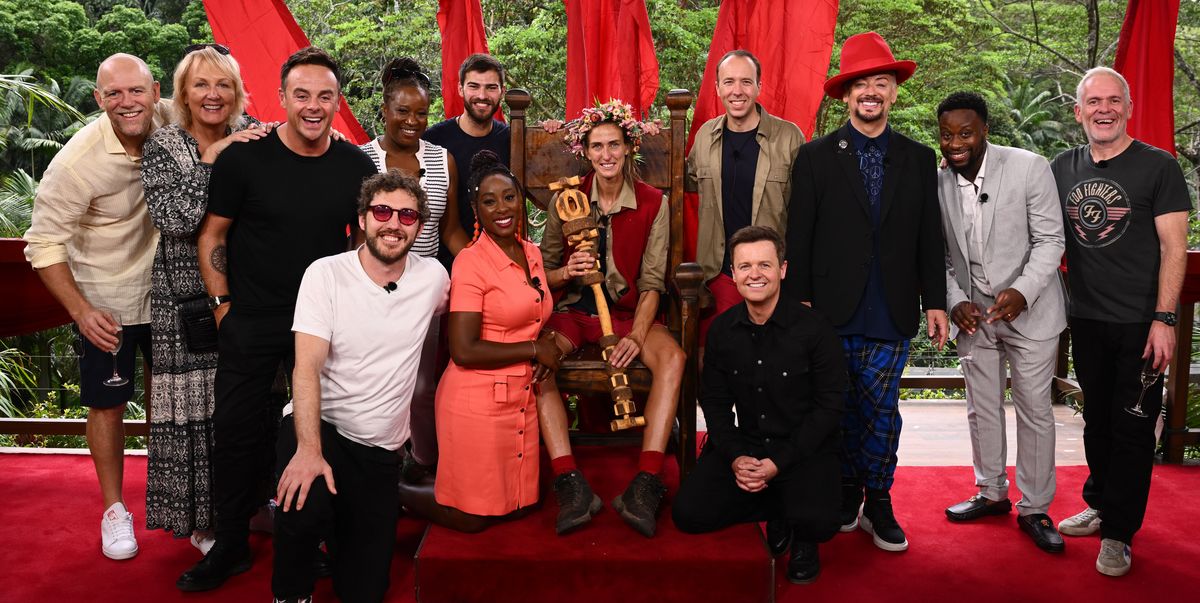
The final episode of I’m a Celeb… Get Me Out of Here! didn’t just deliver drama—it ignited a firestorm. As Adam Thomas walked away with the crown, social media exploded with allegations of favoritism, prompting ITV to issue a firm denial. Viewers accused producers of manipulating challenges, editing narratives, and shielding Thomas from the usual scrutiny faced by other campmates. The backlash wasn’t just noise—it reflected deeper concerns about fairness and transparency in one of the UK’s most-watched reality franchises.
The claims didn’t emerge in isolation. They came after weeks of subtle cues: Adam seemingly avoiding the harshest trials, receiving supportive narration, and appearing central to key emotional arcs. While fans of the former Waterloo Road star celebrated, others weren’t convinced. They saw a pattern—one that suggested producers had anointed a favorite long before the public cast their votes.
The Spark: What Happened in the Final?
The last 48 hours of the series intensified existing suspicions. Adam Thomas entered the final as one of the strongest contenders, but not the obvious frontrunner. His journey included relatively few public disasters, limited exposure to the show’s most grotesque trials, and a steady stream of sympathetic storylines—particularly around his sobriety and mental health.
During the final trials, key moments raised eyebrows:
- Adam completed a trial with notably shorter duration than others in similar positions.
- Editing emphasized his emotional resilience while downplaying his missteps.
- Rivals with higher public profiles or more dramatic arcs were eliminated in quick succession.
When the final vote revealed Adam as the winner over more outspoken or physically challenged contestants, many viewers took to Twitter, Instagram, and Reddit to voice discontent. “He was barely in a scary trial all series,” one fan wrote. “Why was he suddenly the people’s choice when he was barely tested?”
ITV’s Official Response: Damage Control in Real Time
Within hours of the finale, ITV released a statement: “All contestants on I’m a Celeb are treated equally. Voting is entirely in the hands of the public, and no participant receives preferential treatment in casting, challenges, or editing.”
The statement did little to cool tempers. Critics pointed out that while voting is public-driven, the narrative is controlled entirely by producers. What viewers see—and in what order—is curated. And in Adam’s case, the curation appeared unusually favorable.
Behind the scenes, ITV producers operate under strict formats and duty of care protocols, especially with celebrities managing health disclosures. Adam had been open about his struggles with alcohol and anxiety—information that likely influenced how producers managed his journey. But while duty of care is a legitimate concern, it’s also a double-edged sword when it results in perceived imbalance.
How Narrative Shaping Influences Reality TV Outcomes
Reality TV isn’t raw footage. It’s storytelling—crafted, condensed, and emotionally engineered. Producers choose:
- Who gets camera time
- Which conflicts are highlighted
- How trials are edited for drama
- The music and voiceover tone used during segments

In Adam’s case, the narrative leaned heavily into redemption. His journey was framed as one of quiet strength, personal growth, and resilience—archetypes that resonate deeply with British audiences. Compare this to other campmates who were portrayed as volatile, lazy, or out of touch, and the contrast becomes stark.
Consider two examples from the same series:
- One contestant had a heated argument edited into a three-minute villain arc, repeated across multiple episodes.
- Adam had a minor spat that aired for 30 seconds, followed by a healing monologue under soft lighting.
Same format. Different treatment.
This isn’t necessarily unethical—but it is influential. When one contestant’s story is consistently softened or elevated, viewer empathy shifts. And empathy drives votes.
Past Precedents: Has ITV Done This Before?
Adam Thomas isn’t the first winner under suspicion. In recent years, several I’m a Celeb victors have faced similar claims:
- Danny Miller (2020) was seen as a "safe" choice following Kate Garraway’s emotional exit.
- Giovanna Fletcher (2015) won after a heavily promoted “perfect wife and mum” storyline.
- Scarlett Moffatt (2016) was widely believed to have been groomed for victory from day one.
What ties these together? Each winner aligned with a socially palatable archetype: the devoted family man, the wholesome mum, the underdog with a heart of gold. These are not random outcomes. They reflect a production strategy that prioritizes emotional safety and mass appeal over raw authenticity.
ITV isn’t alone in this. Most reality shows manipulate narrative flow to maintain ratings and avoid controversy. But with I’m a Celeb, the stakes are higher. It’s not just entertainment—it’s a national conversation. When the winner feels preordained, trust erodes.
The Role of Public Perception and Fan Campaigns
While ITV denies interference, fan campaigns can also distort outcomes. In Adam’s case, a grassroots push emerged early, using hashtags like #VoteForAdam and sharing clips of his most heartfelt moments. These were organic in origin—but amplified by media outlets and influencers sympathetic to his story.
Organic support is valid. But when it’s combined with editorial favoritism, the line blurs. Was Adam popular because of who he is—or because the show made him feel more relatable, more enduring, more deserving?
Consider this: during the series, Adam’s trial participation rate was 37%—below the camp average. Yet, he was rarely criticized for it. Others who skipped trials faced mockery or were labeled “freeloaders.” This disparity in treatment, whether intentional or not, feeds the belief that some rules don’t apply equally.
The Bigger Picture: Reality TV, Ethics, and Viewer Trust
The Adam Thomas controversy isn’t just about one contestant or one season. It’s about the ethics of storytelling in reality television. Audiences accept that editing shapes perception. But they expect a baseline of fairness—a sense that everyone is playing by the same rules.
When that illusion breaks, so does engagement.
Producers walk a tightrope:
- Protect contestant wellbeing (especially with disclosed mental health issues)
- Deliver compelling TV
- Maintain competitive integrity
Fail on any front, and backlash follows. In this case, ITV may have prioritized narrative and safety over perceived equity—and paid the price in credibility.
Moreover, the show’s format has changed. Once a test of endurance and nerve, I’m a Celeb now often feels like a platform for personal redemption tours. Trials are shorter. Medical exits are common. Emotional confessions dominate screen time. The shift isn’t accidental. It’s a response to evolving audience expectations and stricter broadcasting standards.
But with that evolution comes a cost: the risk of turning a survival challenge into a sympathy contest.
What Could ITV Have Done Differently?
Hindsight is clear. Looking back, a few strategic adjustments might have defused the controversy:
- Rotate narration focus more evenly across campmates.
- Ensure all finalists face at least two major trials in the final week.
- Avoid repetitive use of redemptive tropes in post-trial interviews.
- Release a brief production note explaining trial selection criteria.
Transparency—even minimal transparency—can go a long way. A short behind-the-scenes clip explaining how trials are assigned, or how editing teams balance screen time, could help reassure viewers that outcomes aren’t pre-scripted.
Instead, ITV’s response was boilerplate. “All treated equally” doesn’t satisfy when the evidence on screen suggests otherwise.
Moving Forward: Can Trust Be Restored?
The next series of I’m a Celeb will be watched more closely than ever. Fans will scrutinize editing choices, trial frequency, and narrative arcs with fresh skepticism. For ITV, that means one thing: perception matters as much as policy.
To rebuild trust, the show should consider:
- Publishing anonymized data on trial participation rates.
- Introducing an independent format observer (similar to sports officiating).
- Diversifying winner archetypes—let the “flawed but fascinating” win occasionally.
- Acknowledging fan concerns directly, not through PR-approved statements.
Reality TV thrives on emotion, but it survives on credibility. Without both, even the biggest names and boldest stunts won’t save it from decline.
The Adam Thomas debate isn’t over. It’s a symptom of a larger shift—audiences no longer passive consumers, but active critics. They don’t just watch the show. They dissect it. And when the seams show, they call it out.
For ITV, the choice is clear: adapt with transparency, or keep defending the indefensible.
FAQ
Did Adam Thomas win I’m a Celeb fairly? The public voted, so procedurally, yes. But many believe production decisions—editing, trial selection, narrative focus—gave him an unfair advantage.
Why are people accusing ITV of favoritism? Viewers noted Adam avoided major trials, received sympathetic editing, and was consistently highlighted in emotional storylines compared to others.
Has ITV ever admitted to favoring a contestant? No. ITV maintains all contestants are treated equally and that voting is entirely viewer-driven.
Was Adam Thomas protected due to his mental health? It’s likely. He has spoken openly about anxiety and sobriety, and producers have a duty of care. However, this may have influenced his trial exposure and editing.
How are trials assigned on I’m a Celeb? Officially, it’s random. But producers consider medical fitness, mental health, and storyline flow—factors not visible to viewers.
Could fan campaigns have influenced the result? Yes. A vocal fanbase promoted Adam heavily online, boosting visibility. Combined with positive editing, this likely helped his vote count.
What can ITV do to prevent future controversies? Greater transparency—like releasing trial participation stats or explaining selection processes—could help rebuild viewer trust.
FAQ
What should you look for in ITV Denies Favoritism Claims Over Adam Thomas on I’m a Celeb? Focus on relevance, practical value, and how well the solution matches real user intent.
Is ITV Denies Favoritism Claims Over Adam Thomas on I’m a Celeb suitable for beginners? That depends on the workflow, but a clear step-by-step approach usually makes it easier to start.
How do you compare options around ITV Denies Favoritism Claims Over Adam Thomas on I’m a Celeb? Compare features, trust signals, limitations, pricing, and ease of implementation.
What mistakes should you avoid? Avoid generic choices, weak validation, and decisions based only on marketing claims.
What is the next best step? Shortlist the most relevant options, validate them quickly, and refine from real-world results.